
News from CATCH, an acronym for the Hamilton, Ontario-based watchdog group, Citizens at City Hall
(A Brief Foreword from Niagara At Large publisher Doug Draper – It makes me damn sick and angry to write this. But after all the almost four and a half decades since the first Earth Day, with some of the most respected scientists, medical experts, ecologists and urban planners on this North American continent warning of the toll that spiraling use of carbon burning cars will have on our health and the health of the planet – not to mention the budgets of our towns and cities – we keep clogging up our roads with more cars.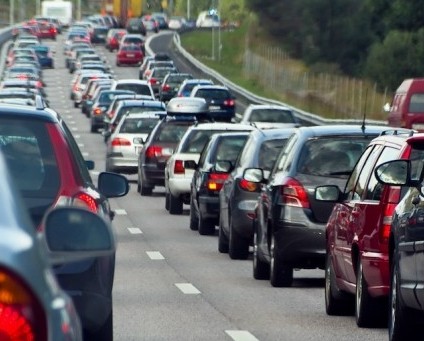
That is why I am posting this piece by CATCH. It must be read and although it focuses on the Hamilton, Ontario slice of this problem, Niagara is right there in the data of the study produced by University of Toronto researches and cited here. As much as many of our Niagara municipal politicians have paid lip service to smarter growth in recent years, they continue to approve car-dependent, low-density suburbs and malls, etc. out into the corn and soy bean fields of this region. At the same time, they still do not have the vision to build a truly regional, affordable and accessible public transit system in this region. All we have so far is this embryotic and token “pilot” inter-municipal transit system that was almost designed to be a recipe for failure.
We have municipal elections happening in Niagara this October. Make sure you vote for those who will serve on our councillors as progressive, smarter growth, transit-friendly visionaries for the future.
Now here is the post from CATCH.)
More than a third of Hamilton’s workforce is now commuting outside the city, slowly continuing a long-standing trend and adding to highway congestion. The recently released results of the massive Transportation Tomorrow Survey show local residents have more cars, and are driving them further and more often, although there is also a slight uptick in transit use.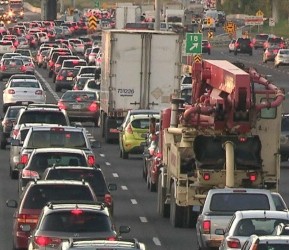
The TTS collected 2011 travel data from nearly 160,000 households – just over 5% of those in the twenty participating municipalities that include all of the Greater Toronto Area (GTA), Hamilton, Niagara Region, Waterloo Region, Guelph, Brantford, Barrie, Peterborough and the counties where they are located.
The Hamilton section of the report provides data for each of the six former municipalities that show nearly 60,000 employees travelling outside the city to work. That’s 34.4 percent of the workforce, up from 32.4 percent (53,500) in 2006. The contribution of Hamiltonians to regional traffic congestion has been climbing since the first TTS report twenty five years ago recorded 15.6 percent out-commuters (23,000).
The vast majority (82.5%) head into the GTA with over half of those travelling to Halton region. That’s similar to the 2006 results although there’s been a slight shift of about 700 commuters each to Niagara and Waterloo regions.
With the Toronto area now boasting some of the worst congestion on the continent, the provincial government has committed to a massive expansion of trains and buses including a rapid transit corridor in Hamilton. City councillors want full provincial funding for the latter – whether it’s light rail or a bus rapid transit system – but almost unanimously have rejected provincial suggestions for additional funding sources such as road tolls, parking fees, and/or gas tax hikes.
The city-wide numbers report Hamiltonians making an average of nearly three-quarters of a million vehicle trips per day, up about 35,000 on 2006. They also show 84 percent of all trips are by drivers or passengers in a vehicle, with walking and cycling accounting for 5 percent.
About 7 percent of Hamilton trips use local transit and another 1 percent travel on the GO system. That’s up slightly from 2006 when the GO numbers were too small to turn up in the rounded final figures, but is still less than the ten percent recorded in the 1986 TTS survey. The remaining 3 percent travel by taxi, school bus or motorcycle.
The TTS survey shows one in every seven Hamilton households did not have access to a vehicle in 2011, while nearly as many (11 percent) had three or more cars and trucks. For the first time in the five-year surveys, a clear majority of homes (56 percent) had two or more vehicles.
Not surprisingly, the breakdown by former municipality shows dramatic differences, with vehicle ownership far higher in the suburbs, especially in Flamborough, Ancaster and Glanbrook where at least 97 percent of households have at least one vehicle.
Flamborough is the lowest with one percent car-less, while Glanbrook has two percent and Ancaster three percent. In Stoney Creek one in twenty households don’t have a car, in Dundas it’s just about one in ten and in the old city of Hamilton a full one in five are car-less.
The TTS data doesn’t examine road space per household in the various former municipalities but lower density development especially in the newer suburban areas could mean multi-car households are being subsidized by those with just one vehicle or none. In the old city of Hamilton, for example, two-thirds of households have less than two vehicles, while that situation applies to less than one-third of homes in each of Ancaster, Glanbrook and Flamborough.
There are similar substantial differences in average length of trips, ranging from over nine kilometres in Glanbrook and Flamborough, to barely four in old Hamilton. The average for the whole city was 5.1 km with Dundas second lowest at 4.9 km.
Road and bridge construction and maintenance will consume over $100 million in this year’s city budget – more than a third of the total capital expenditures. Those numbers don’t include other road-related spending such as reconstruction connected with water and sewer projects paid for by water rates, policing costs, $6 million for street sweepers, etc.
CATCH (Citizens at City Hall) is a volunteer community group that encourages civic participation in Hamilton. Our members attend and report on meetings of city councillors and other City committees, and carry out related research and activities.
For more on CATCH, visit the group’s online site at http://hamiltoncatch.org/index.php .
(Niagara At Large invites you to share your views on this post. A reminder that we only post comments by individuals who share their first and last name with them.)
 Niagara At Large
Public transportation must always be subsidized by tax payers and will never reach everybody who want to use it. Most jobs created will be again “Public servants”.
I believe to reduce carbon dioxide and create jobs if Canada and especially Ontario would be much more involved in the fuel cell technology. Hydrogen can be used to store excessive electrical power. We even have a company in Ontario with a good reputation which is active world wide.
Naturally that costs also money but we should join those who are already working on this.
Better spending money to become independent from not reliable sources and fighting wars to get the needed oil or destroying our environment by questionable techniques we should at least look into using hydrogen as a future cleans source of energy for our cars.
Complaining does not solve any problems – only people with an appropriate education and track report can do this. I believe not many politicians are qualified!
LikeLike