
A Commentary by Niagara At Large publisher Doug Draper
As busy as I am preparing for a re-launch of Niagara At Large on September 9th, I cannot let the 50th anniversary of one momentous event pass without comment.
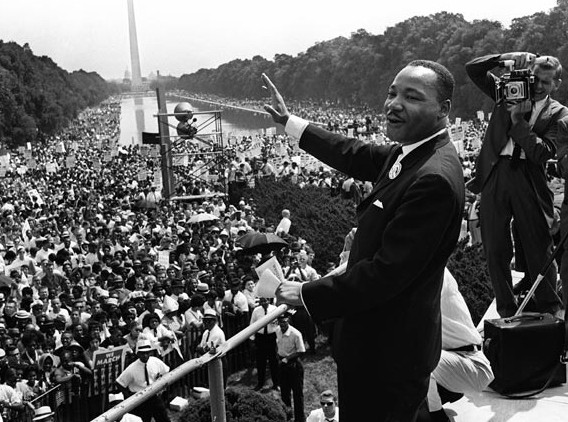
Martin Luther King at the March on Washington, August, 1963
On August 28th, 1963, American civil rights leader Martin Luther King stood on the steps of the Lincoln Memorial in Washington, D.C. and delivered one of the most stirring and history changing speeches of the last hundred years.
Before more than a quarter of a million people – black, brown and white, of all religious and non-religious persuasions – who had gathered around a reflective pond that stretched all the way back to the Washington Monument where the White House was just a short walk away, King let loose with one of the greatest of all the great speeches he delivered during a civil rights crusade that ended for him when he was assassinated in the spring of 1968.
It became known over the years as his ‘I Have A Dream’ speech and it was loaded with moving and memorable lines that captivated those who gathered for this late-summer ‘March on Washington’ and millions more who watched or heard the address on television and radio. Of all of the many brave lines in that speech, one of the first that always came to mind for me was King’s dream for the day when his children could grow up in an American where “people are not judged by the colour of their skin but by the content of their character. …”
“This is our hope,” King went on to say. “This is the faith that I go back to the South with. With this faith we will be able to hew out of the mountain of despair a stone of hope. With this faith we will be able to transform the jangling discords of our nation into a beautiful symphony of brotherhood. With this faith we will be able to work together, to pray together, to struggle together, to go to jail together, to stand up for freedom together, knowing that we will be free one day. …”
“And when this happens, when we allow freedom to ring, when we let it ring from every village and every hamlet, from every state and every city, we will be able to speed up that day when all of God’s children, black men and white men, Jews and Gentiles, Protestants and Catholics, will be able to join hands and sing in the words of the old Negro spiritual, “Free at last! free at last! thank God Almighty, we are free at last!”
In the days and hours leading up to the 50th anniversary of Martin Luther King delivering these words on a sun-soaked August 28th afternoon in his nation’s capital, many have asked how far America has come in fulfilling his dream. The answers to that question have been understandably be mixed.
The same year King delivered that speech I was barely 12 years old and had just finished reading a book called ‘Black Like Me’, written by John Howard Griffin, a white man who darkened his skin and traveled down into the deep south of America where he experienced the humiliation of being barred from sitting at a lunch counter in a cheap five and dime store because he was black or was a “negro” or “nigger,” to so sadly remind you of the lexicon in use at the time down there in “bible belt” country, which I always felt more than a little interesting. They are the bible people, those whites down there in Mississippi and Alabama and Georgia and those other regions where the self-righteousness and people who wore white sheets at night and burned crosses ruled?
Those most overt expressions of racism in America are mostly gone now, although I still hear a few down there and some even here, on the Canadian side of the border, say things like; ‘We had a black couple move into our neighbourhood this summer, and they are so nice. And they keep their property clean too.”
It’s a polite way of reversing the old thing of not wanting a black family to move into the neighbourhood. I worked with an editor at the St. Catharines Standard here in Ontario who remembered people back in the 1960s, in the old white ‘wonder bread’ neighbourhood of Glenridge in that city, circulating a petition to keep a black family out of that neighbourhood. That was Canada – not Alabama or Mississippi – less than a lifetime ago.
In the United States, some key strides were made after Martin Luther King delivered that speech. The Civil Rights Act, legally banning segregation or what was an American version of South African apartheid, was passed in 1964 and a Voters Right Act was passed in 1965, supposedly putting an end to the efforts by some more conservative states to keep blacks from exercising their franchise in a voting booth.
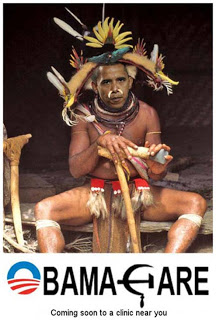
A favourite poster of the American-based Tea Party at rallies featuring mostly older white people who are also want to yell; ‘I want my country back.’ That line is code for get the black man out of the White House. Puzzling enough, many of these people are poor and under or unemployed and yet allow themselves to be manipulated by a Republican Party financed by the upper one per cent.
All of this, not to mention the many protests by King and his supporters going back to the Montgomery, Alabama bus boycott with Rosa Parks from the1950s – non-violent demonstrations on King’s side that saw so many going to jail for simply asking America for their rights as Americans – helped make it possible for a black person named Barack Obama to be elected president of the United States in 2008.
This August 28th, President Barack Obama was able to stand up on the Lincoln Memorial, in the same place Martin Luther King did 50 years ago, and speak of the progress that has been made and how much more needs to be done to ensure that people in that country are judged not by the colour of their skin, but by the content of their character.
And as much as America has progressed from the fire hoses and police dogs unleashed on black protesters in the south who only wanted the right to drink from a public water fountain or attend a college or university, it seems there is so much more that needs to be done to fulfill that dream.
There is the anger and hatred that still lingers by some people and for some people – the visceral instinct some people seem to have that they might snake ahead by putting other people down. It is, as it always has been, a recipe for human degradation.
There is, still in the United States today, a significant number of Sarah Palin/Fox News followers who feel that the current president, because he is black, is not really an American. Even when he falls to his knees to produce his American birth certificate, they continue to argue that Barack Obama may not be an American. Their Tea Party ilk throw up signs with images of him at their rallies that might just as well have them wearing white sheets and burning crosses in front of Martin Luther King’s house.
There are the disproportionate number of people of colour filling the poorest neighbourhoods with the worst schools and jails of America, and who are unemployed. Young black people in American today are unemployed more than twice the country’s national average.
So as some celebrate the achievements of King’s civil rights movement, there is a great deal more that needs to be done.
In his final years, before he was assassinated in Memphis, Tennessee, where he was there supporting striking sanitation workers, both black and white, King had moved from basic racial rights to leading economic injustice and anti-war campaigns.
David Garrow, who wrote one of the great bios on Martin Luther King called ‘Bearing the Cross’, was once interviewed saying that the mainstream American culture and media has come to finally embrace King as someone who ended overt segregation around lunch counters and where someone could go to the bathroom. But when it comes to the economic injustice and anti-war issues King championed most profoundly in the final years of his life, that is another story.
Martin Luther King was truly one of the great human beings we shared this earth with in the last 100 years. It would do us all well to learn more from his documented speeches and writings, and from his best bio writers, and to do our part, in our own humble way, to make his dream of peace and social justice for each and every one of us who care about each other and our communities come true.
As a final footnote here, I just finished watching U.S. President Barack Obama on CNN, delivering his speech on the steps of the Lincoln Memorial during the 50thanniversary March on Washington commemorations. How lame it was compared to the speech Martin Luther King delivered that day. In fairness to him, maybe he had bombing brown people in Syria on his mind (something the U.S. military complex now seems determined to do against what King, if he were alive, may have wished in front of other more non-violent options) but it was a lame speech anyway. Obama, as has come to seem the case, seems afraid to talk about the plight of blacks and other minorities in American for fear of Palin, Rush Limbaugh and Fox News accusing him of playing “the race card.” How sad that he doesn’t just tell them to take a hike. But that might be somethingMartin Luther King would have the courage to do.
You can read the entire ‘I Have A Dream Speech’ on the Huffington Post by clicking on http://www.huffingtonpost.com/2012/01/16/i-have-a-dream-speech-text-martin-luther-king-jr_n_1207734.html .
Niagara At Large also invites all of you who are willing to share your name with your comments to also share your views on this topic in the space below.
 Niagara At Large
I was living in Maryland in 1963. Washington DC was a segregated City for all purposes. I, being very naive about segregation, figured that the nations capital was desegregated, so went into a black owned McDonalds for lunch, a lot of raised eyebrows, as I was their only white customer, over the Potomac River, Black people could only marry black people, Asians could only marry Asians, I was married in the State of Virginia , blood tests and affidavits had to be sworn too. Much has changed since 1963. How ironic that Lincoln, a Republican President, declared the emancipation of Black Americans. Now Republican Governors ,in the North and the South, are making it very hard for Black Americans to vote. Pennsylvania and Ohio enacting anti voting laws, to discourage blacks in the last presidential election from voting. So the fight is still far from over.
LikeLike