
By Doug Draper
There was a time, not that many years ago, when a number of Niagara, Ontario’s most popular beaches were posted closed to swimming all summer long.
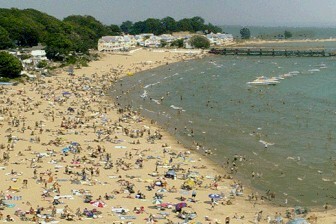
Bay Beach, in the old Crystal Beach area of Fort Erie, Ontario, along the shores of Lake Erie
Not that field staff for Niagara Region’s health department was actually out at these beaches, physically barring people from going in the water. The postings were a warning that the waters were swamped with such high levels of infectious bacteria that people shouldn’t swim in them.
Now, according to a new report called Niagara’s Beaches: Hidden Gems and prepared for the Region by Brock University’s Niagara Community Observatory, there is reason for “cautious optimism” that the quality of waters at 26 of the more popular public beaches in Niagara have improved to a point where people can feel safe bathing in them.
At Lakeside Beach, located along the sandy shores of the St. Catharines, Ontario community of Port Dalhousie, where representatives for the Observatory and Region released the report this June 28, monitoring records for beach waters show that the beach was posted as potentially unhealthy to swim in for 14 per cent of the days of the spring and summer swimming season. Less than two decades ago, the waters at Lakeside Beach were so contaminated with E. coli bacteria that they were posted all summer long.
At Nickel Beach off Lake Erie in Port Colborne, the waters were posted as potential unsafe 19 per cent of the time in 2012 and at Bay Beach in Fort Erie the waters were posted potentially unsafe 13 per cent of the time. You can find the results for other Niagara, Ontario public beaches by accessing the entire report at https://brocku.ca/webfm_send/26984 .
Some of the sewage that leaves these beaches contaminated with potentially dangerous levels of E. coli bacteria comes from overflowing municipal sewer systems that don’t make it through regional treatment plants during rainstorms. Some also comes from runoff from rural communities and farmlands.
Niagara’s municipalities and others have spent hundreds of millions of dollars, running into the billions, over the past 20 or 30 years, improving sewer systems to keep raw sewage from flowing into our rivers and lakes. Many of our communities have aging storm sewer systems and much more money has to be spent, if we can afford it, to keep them up to speed with sprawling development.
In the meantime, Doug Hager, author of the report, said there are many things we, as individual property owners, can do to keep contaminated water from entering our rivers and lakes. You can learn about what we can do as residents in this region to keep beach waters safe from contamination by visiting the report at https://brocku.ca/webfm_send/26984 .
“If everyone does their part in reducing runoff,” said Hagar, “we can continue to enjoy our local beachs and lakes for years to come.”
For more information on the Niagara Community Observatory, visit the research body’s website at http://www.brocku.ca/niagara-community-observatory .
(Niagara At Large invites you to join in the conversation by sharing your views on the content of this post below. For reasons of transparency and promoting civil dialogue, NAL only posts comments from individuals who share their first and last name with their views.)
 Niagara At Large
While the measures outlined in this article appear to be a step in the right direction, it is very disturbing that we continue to stress this valuable resource. Companies and all levels of government have been using the lakes as their personal dumping ground for decades.
How long can this go on? We are already a cancer hot spot. Does anyone else out there think that might have something to do with the water?
You are what you eat, drink and breath are you not?
Just sayin……
LikeLike
How long indeed Mr. Middleton.
And if we report pollution to our local authorities, what do you think they will do about it?
Click the link below and find out: http://newsalertniagara.blogspot.ca/2012/11/watersmart-niagara-how-does-that-work.html
LikeLike