
By Dr. Gary Screaton Page
(This is the third in a series of articles by Dr. Gary Screaton Page that Niagara At Large is posting about some of the immigrants and refugees who have come to Canada to begin a new life after some often unimaginably brutal experiences they have suffered through in their countries of origin. In these posts, based on stories Dr. Page has learned from helping newcomers to the country in his border town of Fort Erie, Ontario, names have either been changed or last names have been omitted to protect individuals and their families and friends from any repercussions in their native lands.)
Human trafficking is one of the fastest growing crimes in Canada. A form of slavery, this crime often preys on immigrants and refugees who do not speak any English. Here is just one of their stories.
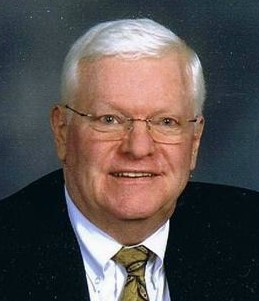
Dr. Gary Screaton Page
Nineteen-year-old Timea could not conceal the joy she felt as she boarded the plane for Canada. The agent who had hired her in Hungary and arranged for her flight told her she would have the choice of working as a nanny, housekeeper, or dancer when she arrived. With her education and entertainment industry background these opportunities sounded interesting to her. Not only would she be able to earn some money while travelling in Canada, she would also be learning first hand about Canadian culture.
Filled with a young woman’s sense of adventure, Timea disembarked and was met by her Canadian employers at the Toronto International Airport arrival gate. Quickly they whisked her away to her summer residence where Timea’s joy turned to horror.
Almost immediately her hosts stripped her of her identification and told her that she would be working not in any of the areas she expected but that her “contract” required her to be an exotic dancer: not at all the job this intelligent young woman would ever have chosen for herself.
As if exotic dancing was not bad enough, for Timea things were to quickly get worse. Within a short time she was forced further into the sex trade in Toronto. There, over the next three months, she was frequently assaulted. The control by her “employers” and even her “agent” seemed unrestrained. But what could she do? She spoke no English, had no identification, and no money. What is more, she knew almost nothing about the area in which she was staying. Timea was totally dependent upon her captors. Her food, clothing, even the opportunity to look after her personal needs, were at the discretion of those who held her prisoner. Any complaints could be met with violence.
Then, one day her chance came. She managed to escape and make her way to the airport where she got a ticket and returned to Hungary. Her freedom was but an illusion, however. Timea thought she was returning home to safety. In reality she found herself in even greater danger in Hungary where the police offered her no help at all. Desperate, she made a fateful decision. What may seem to have been against all reason, Timea returned to Canada where, ironically, she actually felt safer.
Here, in March of 1999, a twist of good fortune connected her with the detective who headed up a joint task force made up of Immigration officers, the Royal Canadian Mounted Police, and other organizations. The task force had been set up to clean up the exotic entertainment industry in the Greater Toronto Area and in time endeavoured to bring Timea’s captors to justice.
Unfortunately her “employer” and sexual assaulter were acquitted on all charges. Then, adding insult to injury, with the closing of the court case Timea’s work permit expired and, of course, she lost her “job”. Broke and alone, she was devastated and on the verge of mental collapse.
There was, however, a light at the end of her dark tunnel. Through a series of fateful twists and turns, in February of 2005 Timea was granted Permanent Resident status by the Canadian government. So began her return to wholeness.
Presently, Timea is giving back to those who have helped her along the way to recovery from her initial enslavement in Canada. She continues to heal and forgive the pain of her first years in our country. She now speaks to police, Victim Services, and other community agencies teaching them about her experiences as a victim of human trafficking in the very country where she now finds a safe haven.
She has further shared her message of hope through answering suicide hotlines and as a volunteer for the United Way, dealing with distress calls. She also initiated a number of fundraising events for youth-oriented organizations like the Future Aces Foundation. Out of those experiences and from a strong desire to affect change, Timea founded No More Violence, a project designed to stop gun and youth violence in North America.
Her book, Memories of a Sex Slave Survivor, recounts her difficult journey into the underbelly of the sex-slave trade and the personal healing and forgiveness that followed. With it Timea hopes to inspire others to rise above their victimization and to help them to lead joyful and purposeful lives in spite of their difficult circumstances.
Timea’s refugee journey began when she arrived in Canada and that is where it ends. Today she is living proof that, when given the opportunity, one can live a full and productive life in spite of difficult circumstances. You can learn more about Timea’s work at www.walk-with-me.org.
Dr. Gary Screaton Page is the author of ‘Being the Parent YOU Want to Be: 12 Communication Skills for Effective Parenting’. He is a Chaplain with the Niagara Regional Police Service and he has provided counselling and other assistance to many newcomers to this region of Canada. Gassilde’s story is adapted from the book Gassilde written by her son, Jean d’Or Nkezabhizi. Contact Gary at drgary@cogeco.ca.
(Niagara At Large invites you to share your views on this post in the comment boxes below. Please remember that NAL does not post anonymous comments or comments by people using pseudonyms. Only comments attached to real names will be posted here.)
 Niagara At Large