
(Niagara At Large is posting this media release from Ontario PC Leader Tim Hudak for our readers’ information. NAL will continue to post newsworthy media releases from all political parties in the province and we invite you to share your views on them in the comment space below.)
“We can’t manage the deficit without addressing what is the single biggest line in our budget – public sector compensation.” – speech by Finance Minister Dwight Duncan, Toronto, July 20, 2010
January 16, 2012
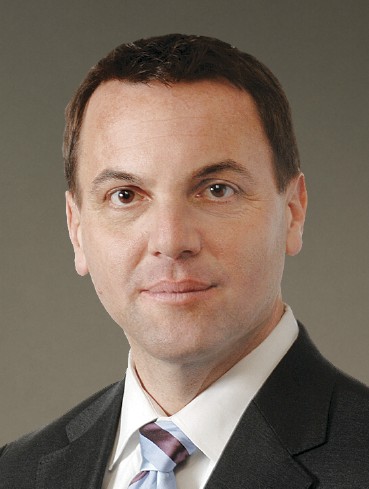
Ontario PC Leader Tim Hudak
HUDAK: ONLY ONTARIO PCs WILL FREEZE PUBLIC SECTOR SALARIES
QUEEN’S PARK – Dalton McGuinty’s dithering over his jobs and spending crises demands an immediate and mandatory public sector wage freeze, Ontario PC Leader Tim Hudak said today.
“We have 560,000 Ontarians out of work and a spiralling $16 billion deficit,” Hudak said. “It’s time for immediate action – starting with our repeated call for a public sector wage freeze to help protect funding for front-line services.”
Hudak cited Ministry of Finance figures showing that more than $50 billion of all government program expenses goes to compensation. Further, according to an analysis by the Canadian Federation of Independent Business, public sector employees are paid between eight and 17 per cent more than similarly employed individuals in the private sector.
“Add in all their other benefits, such as pensions, and you get total compensation that’s up to 27 per cent higher,” Hudak added. “And by Minister Duncan’s own admission, public sector settlements under this government were one and-a-half times more generous than settlements under previous ones.
“This has simply got to stop.”
Hudak said it’s only fair to ask public sector workers to share in the sacrifices being made every day by their struggling private sector colleagues. He added that several Canadian and international jurisdictions have successfully imposed similar wage freezes:
In BC, the Liberal government has imposed two wage freezes in the past decade
- In the US, the Obama Administration announced a two-year pay freeze for all non-military federal government employees, and
- In the UK, Chancellor George Osborne introduced a wage freeze in 2010 affecting teachers, prison officers and the armed forces
“Dalton McGuinty ignored two successive Auditor’s reports detailing his own runaway spending,” Hudak said. “Later, he blamed Europe for the threat of a credit downgrade.
(NAL is also posting the following just-released media release from the Ontario PCs on the same issue)
FOR IMMEDIATE RELEASE
January 17, 2012
HUDAK: WHICH DWIGHT DUNCAN? YES OR NO TO WAGE FREEZE?
QUEEN’S PARK – Dwight Duncan wants Ontarians to forget that a public sector wage freeze was a good idea at the time in the 2010 budget, Ontario PC Leader Tim Hudak said today.
“Back then, a wage freeze was the Minister’s only notable restraint measure,” Hudak noted. “Let me repeat that – the only one. But from his comments yesterday, even after two years of a failed freeze scheme and a $16 billion deficit, he now thinks it’s a bad idea.
“Which Dwight Duncan will we be dealing with tomorrow?”
An immediate public sector wage freeze would save Ontario taxpayers $2 billion just as Dalton McGuinty has racked up more than $2.5 billion in new spending commitments, Hudak added.
But such a wage freeze would need to be enforced by law, Hudak stressed, noting that this government is a party to nearly 4,000 contracts with public sector workers: “With such an unmanageable number it’s no surprise that Dalton McGuinty’s ‘voluntary’ approach to wage restraint was a total failure – according to the Ministry of Labour’s own statistics.”
Hudak further cited the Auditor General’s June 2011 report, in which Jim McCarter wrote:
‘In past negotiated settlements, public sector salary increases have often exceeded the inflation rate. Even after the government’s announcement in 2010 that it would not fund such increases, most collective agreements negotiated since have still resulted in wage increases.’
“Longer term, the solution lies with changing the way government itself manages its workforce,” Hudak said. “That’s why I’ve called as well for modernizing our arbitration system to reduce the size and cost of government.”
Hudak’s arbitration reform plan would provide greater cost-control and accountability to taxpayers by:
– imposing clear and tight timeframes on arbitrators so provincial and local governments can budget accordingly
- requiring arbitrators to respect ability-to-pay (that is, without the need for tax increases) and take into account local economic conditions and budget constraints, which vary greatly across the province, and
- mandating arbitrators to explain the reasons for their decisions
“I’ve said it before and I’ll say it again,” Hudak concluded “Dalton McGuinty is out of ideas, so he’s welcome to mine.”
 Niagara At Large
Public sector employees are more apt to have stronger union representation, which helps to narrow income disparities. Mr. Hudak’s party, on the other hand, advocates strongly for globalization, which favours weak or non-existing unions, outsourcing, and widening income disparities.
LikeLike
Ask Mr. Hudak how to run a computer business ,I’m sure he will have an opinion on that. Only he will know what I mean but he is more of the same old same old, can,t he come up with one thing that is original. Attack the opposition but don’t come up with some alternatives.Great you plug!
LikeLike
Wage freeze good, 10 % reduction in public sector staffing better. Time for efficiency.
LikeLike
The disparities between public sector and private are already much wider than they should be and this is due to weak government control .!!!!!!
LikeLike
Is this the same Tim Hudak who has lived all of his adult life on public sector wages himself, primarily from a desk jockey position? Maybe I’m thinking of another Tim Hudak.
Perhaps there should not be a freeze but a rollback….a MAJOR one…on public sector wages for the big guys at the top of the salary grid including public sector CEOs and members of parliament.
LikeLike
As somebody in the lowest 20% or whatever, my income dropped by approximately 35% since 2006. Yet I still have to pay more for groceries, transportation, housing and so forth … and then, financial analysts wonder why Canadians are head over heels in debt!
LikeLike
What they failed to mention is that the non union public sector employees are already under a two year wage freeze. However the unions in the public sector which were going to have the same applied when contracts were up have not. They manage to negotiate pay raises. If public sector wage freezes are implemented then it should apply to all members including union and not on the backs of the non union members who are the smallest proportion
LikeLike