
By John Jackson
– With the following introductory note by Niagara At Large publisher Doug Draper
–
Two years ago this past June, U.S. Secretary of State Hillary Clinton walked to the middle of the Rainbow Bridge between Niagara Falls, Ontario and New York and announced that negotiations between her country and Canada would begin to revise the Great Lakes Water Quality Agreement.

Hillary Clinton stands on Rainbow Bridge to announce plans to revise Canada/U.S. Great Lakes Water Quality Agreement. File photo by Doug Draper
More worrisome than that, there is concern that the agreement (the first version of which goes back to the 1970s) could be weakened rather than strengthened when it comes to controlling the discharge of pollution to the lake waters, the introduction of invasive species that could devastate native wildlife in the lakes basin and a number of other concerns. The Council of Great Lakes Industries, a collation that includes among its members some of the largest chemical and petroleum corporations in the world (including, Dow Chemical, BP, Shell and Imperial Oil) are now actively lobbying governments in both countries to have the terms “zero discharge” and “virtual elimination” of pollutants, two of the guiding principles of the Great Lakes agreement for the past three decades, removed from any revised agreement.
The Great Lakes are the largest repository of fresh water in the world – a resource that is vital to the physical and economic health of every individual and community around them. We cannot afford to sit back and allow these life-sustaining waters to be used as an industrial toilet by some of the most profitable corporations in the world – corporations that are hoping to convince us to make a false and dangerous choice between jobs and the economy, and the quality of a resource integral to our very lives.
Contact your provincial, state and federal representatives and let them know that you want a revised Great Lakes Water Quality Agreement that protects and preserves these waters for now and for generations to come. And now here is a message from environmentalist John Jackson, courtesy of the Canada-U.S. citizens coalition Great Lakes United.
Last Chance to Affect Revised Great Lakes Water Quality Agreement
By John Jackson (first posted September 16, 2011.)
The time is upon us. The U.S. State Department and Canada’s Department of Foreign Affairs are putting the final touches on a revised Canada-US Great Lakes Water Quality Agreement. Now is the last chance for you to make input into this rarely revised guide for binational protection and restoration of the Great Lakes and St. Lawrence River ecosystem.
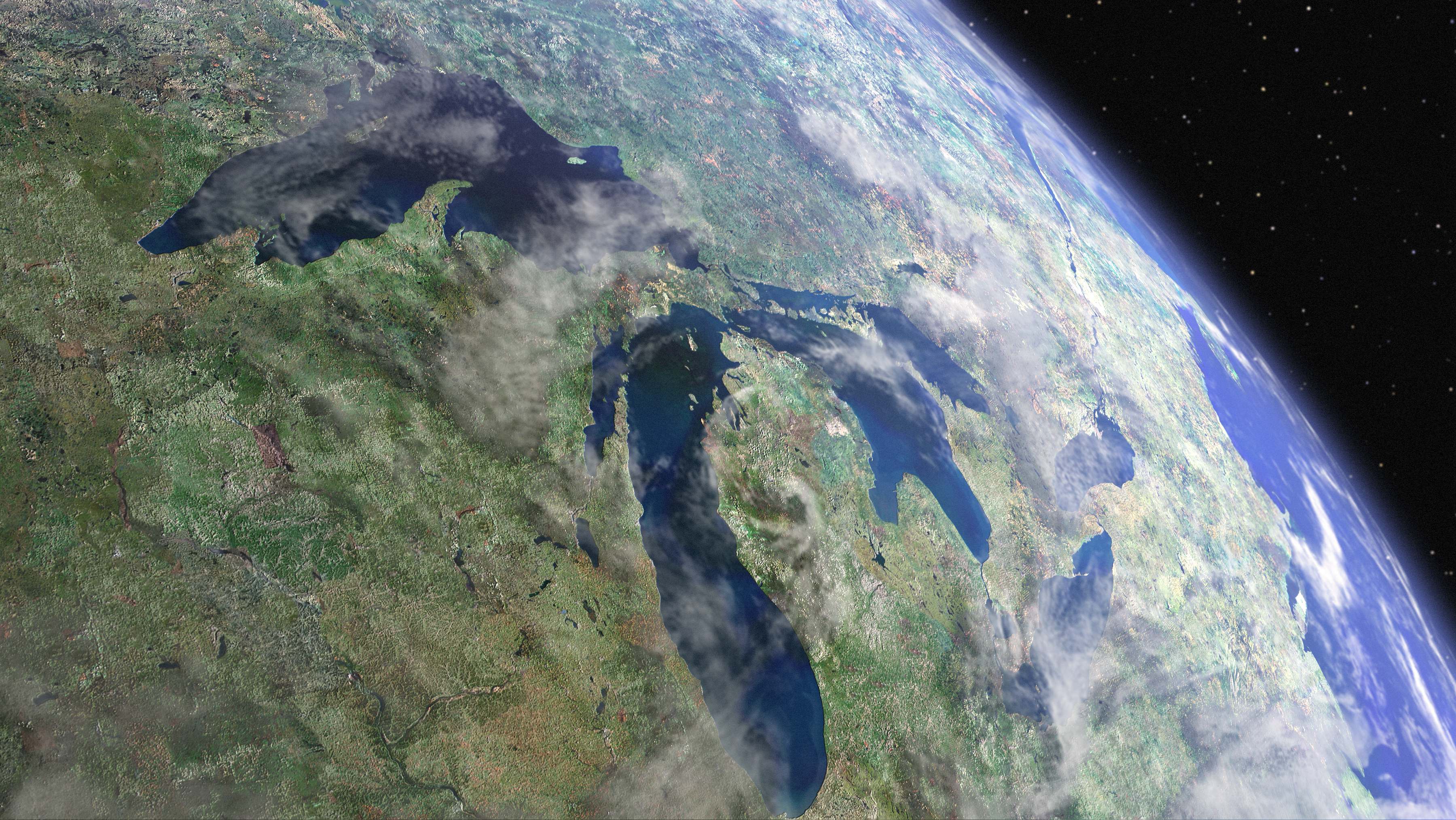
Our life-sustaining Great Lakes. Photo courtesy of Kevin McMahon, producer of the documentary film Waterlife
The information we were able to gather from a vague powerpoint posted for public consultation, the two public forums and the Webinar about the new Agreement have flagged concerns for us about the future of the Agreement.
A few of the major alarm bells that have been set off for us are:
· Timelines, benchmarks, chemical lists and targets, which would be the muscle of the Agreement, do not seem to be there; without them the Agreement will have little weight or value.
· The proposed binational structure (the Great Lakes Executive Committee) would do little, if anything, to build constituencies, promote participation, or foster transparency. Instead it just seems to be a supercommittee of agencies.
· The Great Lakes-St. Lawrence River ecosystem is truncated because most of the St. Lawrence River is left out of the Agreement.
· They are refusing to put in Green Chemistry and Green Engineering and Green Infrastructure as guiding principles in solving and avoiding problems. How can this be an Agreement for the 21st Century without these guiding principles?
· The first actions in the new Agreement all seem likely to be lengthy planning exercises. After almost 40 years of working together in the Great Lakes – St. Lawrence ecosystem, we know enough to act now. We cannot afford more delays on actions for already identified objectives At the same time, we will need detailed plans for new challenges; the public role in developing these new strategies is unclear.
Your last chance to submit comments to the negotiators is by the end of the day this coming Tuesday, September 20. Your comments should be e-mailed to BOTH glwqa-aqegl@ec.gc.ca and glwqa@glnpo.net.
For more information on the Agreement and for the views of the citizens’ groups that we have been working with, go to http://www.glu.org/en/action/speak-out-now-set-us-canada-strategy-protecting-our-great-lakes and elsewhere on the Great Lakes United website.
John Jackson is a long-time environmentalist living in Ontario program director for Great Lakes United, a Canada/U.S. coalition of individuals and groups throughout the Great Lakes Basin which you can learn more about by clicking on http://www.glu.org/blog
(While Niagara At Large is still wrestling to solve a technical problem with posting links, you can take the links we have listed here and key them in to your search engine to visit the information listed above.)
(Niagara At Large encourages you to share your comments on the above posting in the comment boxes below.)
 Niagara At Large
The only thing green about the Great Lakes is the blue/green algae which has been found to cause botulism and killed 73 people in Brazil last year and blamed for 26 deaths in the State of Ohio. (source GLU) web site.also tons of algae was removed from Waverly Beach last year, by unprotected volunteers.the Town provided the dump trucks.
LikeLike