
By Andre Marin, Ontario Ombudsman
(Niagara At Large is posting this piece courtesy of the Ontario Ombudman’s Office and The Ottawa Citizen, which originally published it on its editorial pages on June 20. With so much concern expressed by residents in Niagara over the need for more public scrutiny of our hospital system, NAL is certain this post will be of interest.)
Health care is the provincial government’s single largest budget item and its gravest responsibility. Hospitals and long-term care homes account for the lion’s share of health resources, and with good reason — they are where lives are literally at stake.
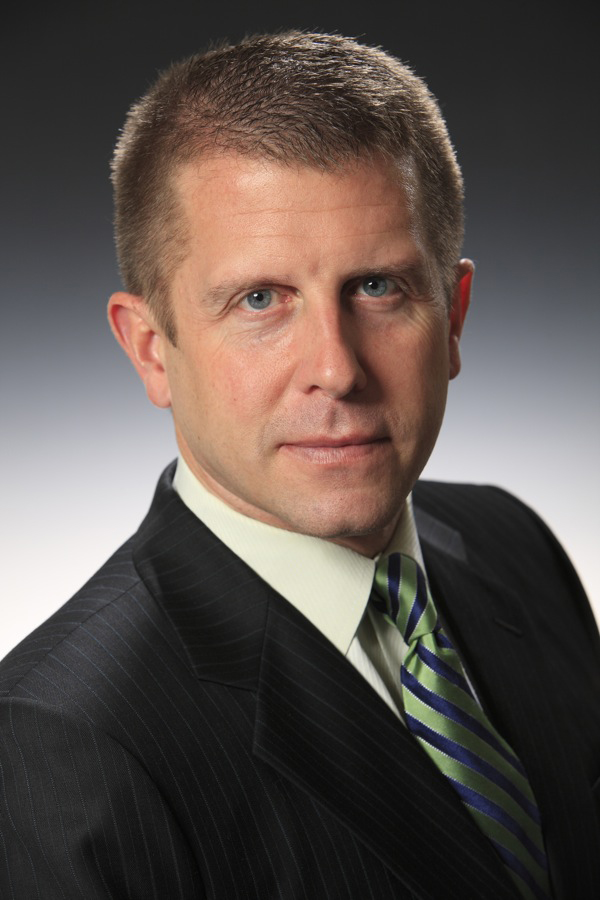
Ontario Ombudsman Andre Marin
Such important institutions deserve full public scrutiny. What is baffling is that Ontario gives that scrutiny such short shrift.
The Citizen discussed this in an editorial last month (“Making hospitals more accountable,” May 11) after the paper reported that the Ontario government is apparently considering a “star rating” system for hospitals. The editorial applauded this idea, saying it “should follow the work already done by the Ontario government to make hospitals more accountable and transparent.”
I’m not going to disagree. I applaud any movement toward transparency — in fact, in the Annual Report I’m releasing Tuesday morning at Queen’s Park, I will outline why I believe the province has to move forcefully in that direction. But as far as hospitals are concerned, I think there is a more obvious and more effective mechanism to improve their accountability.
It’s efficient and, better yet, already in place. It’s my office.
Since the Ombudsman’s office was first established in 1975, my predecessors and I have called for oversight of hospitals. We have watched as every other provincial ombudsman has been given this mandate.
Only in Ontario do citizens not have the option of complaining to their ombudsman about problems they encounter with their hospitals — just as they can about problems in virtually every other provincial government organization. Alberta and Quebec have both expanded the purview of their ombudsmen in recent years to include hospitals. In Saskatchewan this year, the ombudsman’s budget was increased by nearly half a million dollars — about 45 per cent — to support oversight of complaints about the health sector, including hospitals. Ontario stands alone, not because its hospitals are problem-free, but because it shields them from scrutiny.
In fact, even though my office has no power to investigate hospitals, we receive hundreds of complaints every year about them from Ontarians who feel they have nowhere else to turn — 291 complaints in the past fiscal year, to be exact. We are forced to turn these people away.
To be fair, and as the government would be quick to point out, hospitals do face accountability mechanisms. They answer to Local Health Integration Networks, which are subject to ombudsman oversight — but that still leaves their day-to-day operations well out of my office’s reach.
In recent years, my colleague the Auditor General has been given the authority to conduct value-for-money audits in the hospital sector — but that authority, by definition, is focused on financial problems rather than what I would call “human” problems; the difficult, often emotional problems that are an ombudsman’s area of expertise.
Finally, as of New Year’s Day, 2012, hospitals will be subject to freedom of information requests for the first time, under Ontario’s new Broader Public Sector Accountability Act, 2010. However, in a case of one step forward, one step back, the government last month passed an exemption to the law that significantly restricts access to any information relating to “assessing or evaluating quality of health care.” In other words, the very type of information the Citizen editorial envisioned being disclosed.
Now in my second term as ombudsman, with a six-year track record of working with provincial officials and improving governance through our investigations, I’m proud to say that some of my office’s most important work has been in the health sector. Our 2005 investigation of the province’s newborn screening program, once shamefully limited, led to what is now the first-class testing facility at the Children’s Hospital of Eastern Ontario — and saved dozens of babies’ lives. This past year alone, our investigations helped improve the transparency of LHINs, sparked a pledge to regulate the non-emergency medical transfer industry and secured funding for the drug Herceptin for women with breast cancer tumours smaller than 1 cm.
These investigations happened — and the government acted on them — because Ontarians could come to us with their problems with the health system. Hundreds more have similar problems each year with hospitals — problems that can’t be addressed through a value-for-money audit or an information request, or through a hospital complaints office. They are the kind of close-to-home, heart-wrenching problems with poor administrators or rule-bound bureaucrats that my office deals with by the thousands every year. These Ontarians deserve the same kind of help we have given to so many others.
I’m hopeful that our province will eventually follow the rest of Canada and open the door to ombudsman oversight of hospitals. It need only look at the positive results we have achieved in working together in so many other areas.
It would improve hospital accountability, certainly. Even better, it would improve lives.
André Marin has been the Ombudsman of Ontario since 2005. His Annual Report will be available today at ombudsman.on.ca .
(Check out The Ottawa Citizen at www.ottawacitizen.com and Niagara At Large encourages to share your views on this post below and to continue visiting NAL at www.niagaraatlarge.com for more news and commentary of interest to residents in our greater Niagara region and beyond.)
 Niagara At Large
I have great respect for Andre Marin and I would certainly trust him to oversee hospitals. I only wish politicians had as much integrity.
LikeLike
This would be an answer to our prayers.
When the HNHB LHIN approved the Hospital Improvement Plan (HIP), most of us knew the community consultation process was a sham and there had been a predetermined decision already made. Once the Ombudsman investigated the LHIN’s community engagement he proved we were right.
The HIP is a flawed document that will lead to premature loss of life and poor patient outcome.
We desperately need the oversight of the Ombudsman.
LikeLike
Agreed. We need oversight of Ombudsman. Why should we in Ontario accept a third rate system?
LikeLike
Here is a ‘memo’ sent long ago to Niagara doctors. It speaks for itself:
MD core group, October 12, 2009: Not much is happening with us – but a lot is going on all around us. NHS is consolidating (and gloating over) its ‘win’ in Niagara’s southern tier (Port & Fort). Fortunately, time-critical emergencies from Fort Erie will be taken by ambulance from home directly to Buffalo’s ECMC. Of course, that will be a paramedical decision with no FE family doctors involved. Sad that they opted themselves out. LHIN is also pushing ahead with its CHC model of primary ‘health’ care. Again, bureaucrats only, not doctors, involved in the decision-making – at least locally. Farther afield, OMA is making windy pronouncements, taking no action. Again locally, it does seem that a group of 15 family doctors in NF is taking care of its own perceived needs (and threats to it), making patients stick to their contracts, etc., but, unfortunately, other doctor-run walk-in clinics, instead of the lay-bureaucrats, are their selected nemesis – a target to boycott. We, a potentially unique core MD group, have a chance of doing constructive things, but, few takers. Recruitment is stalled. Perhaps we should invite the other two sides of the medical professional trio, selected nurses and pharmacists, to join us. Would appreciate your thoughts on it. /Best regards, Bill
LikeLike