
A Niagara At Large prologue to an important commentary by veteran environmental activist John Jackson
Two years ago this coming June, U.S. secretary of state Hillary Clinton stood out in the middle of the Rainbow Bridge in Niagara, for an event celebrating the 100th anniversary of the Canada/U.S. Boundary Waters Treaty that led to the creation of the International Joint Commission.
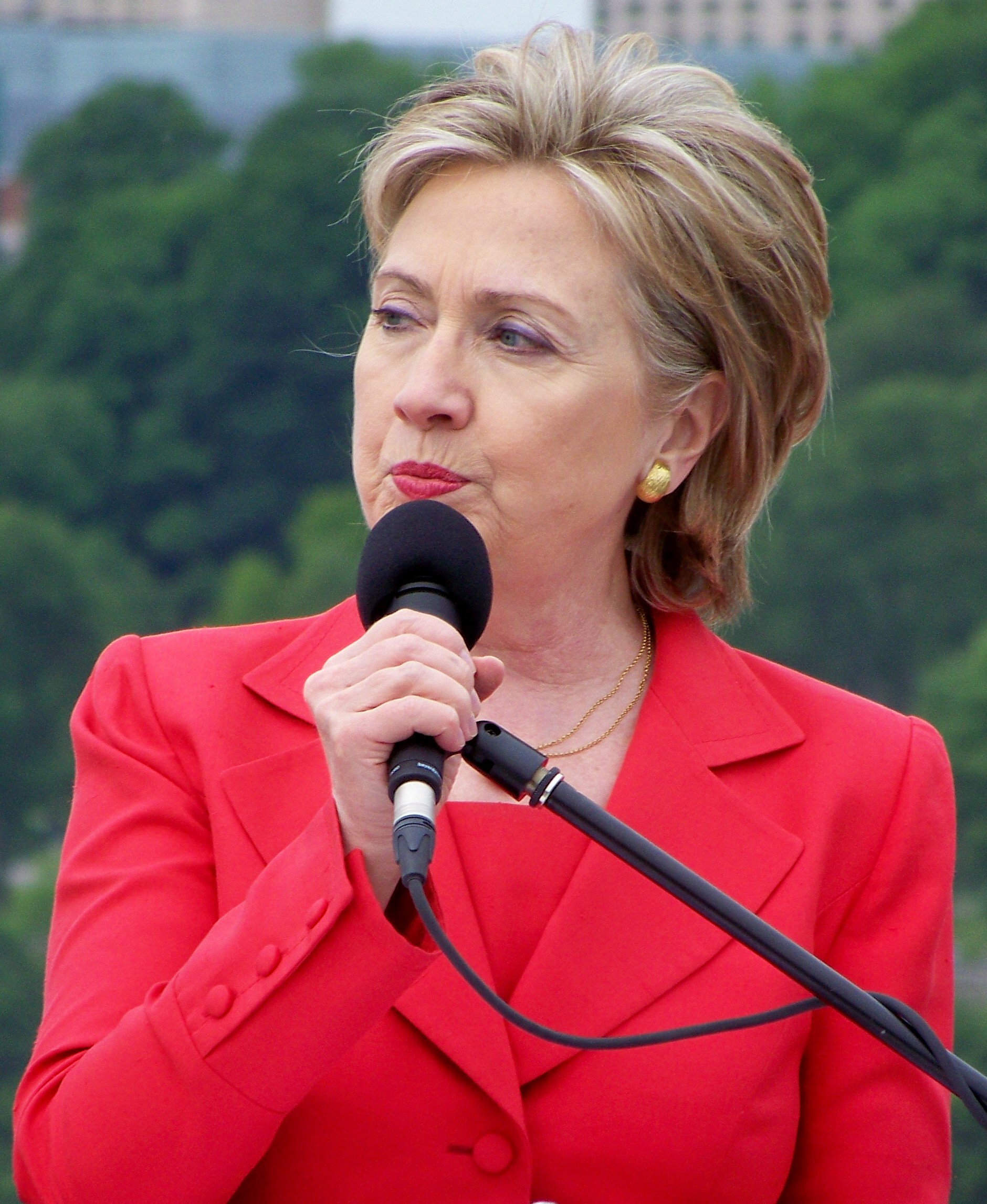
Hillary Clinton, on the Rainbow Bridge two years ago, promises an updated Great Lakes agreement. File photo by Doug Draper
During that moment, on June 13, 2009, Clinton declared that her country was committed to working with Canada to renegotiating the Great Lakes Water Quality Agreement that has so much to do with honouring the promise of the 1909 Boundary Waters Treaty to protect and preserve one of the largest natural basins of fresh water in the world.
“We have to update (the Great Lakes Water Quality Agreement) to reflect new knowledge, new technologies and, unfortunately new threats (to the Great Lakes),” Clinton said.
Almost two years after Clinton made those remarks on the Rainbow Bridge, millions of residents in the Great Lakes basin, on both sides of the Canada/U.S. border, are still waiting for that updated agreement.
Niagara At Large is posting a piece by veteran Canadian environmentalist John Jackson on this subject.
By John Jackson
The review and renegotiation of the Great Lakes Water Quality Agreement has now been going on for almost seven years. We still don’t know when it will come to a conclusion with the signing of a revised Agreement between Canada and the United States.
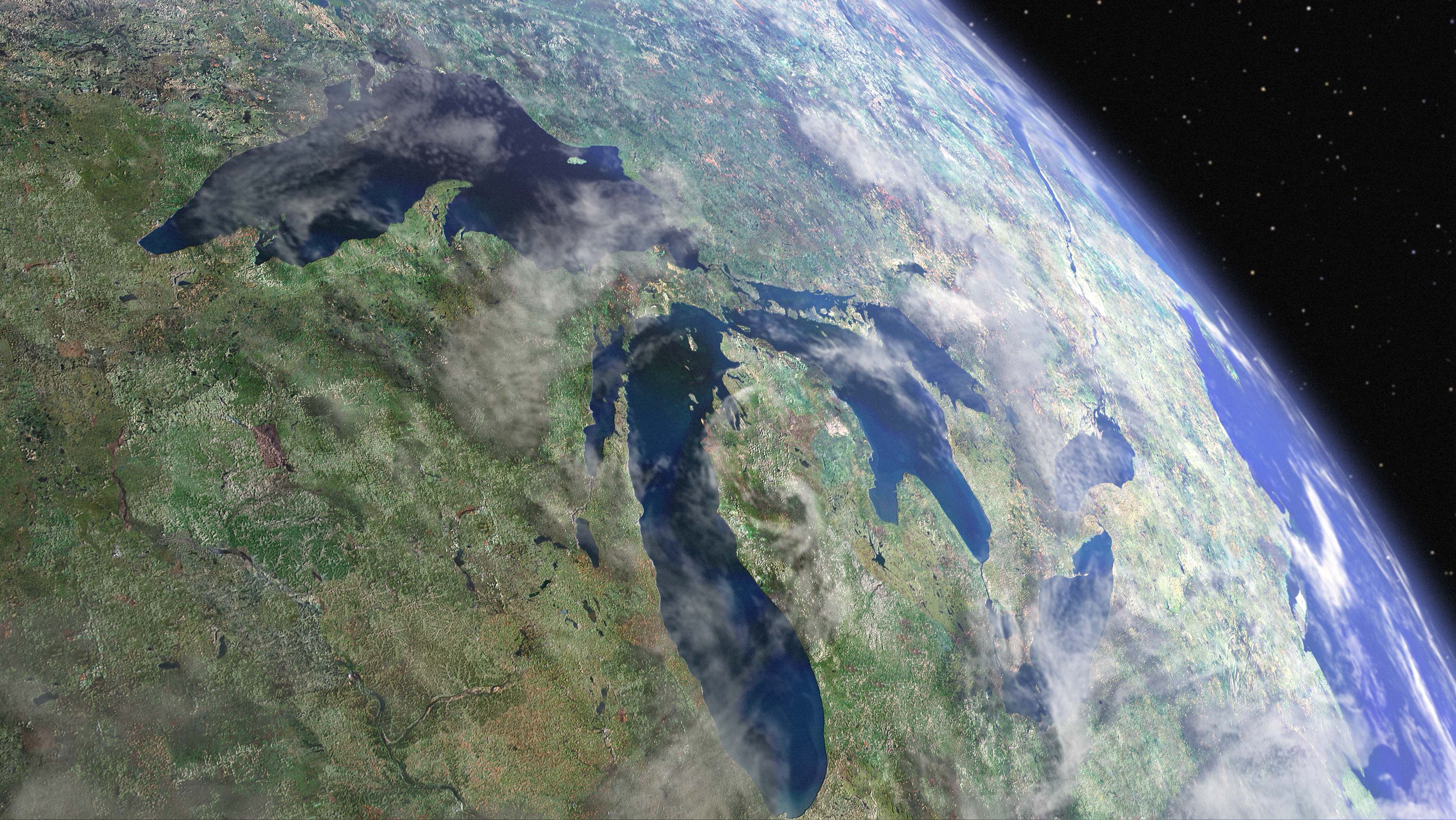
Our Great Lakes from space. Photo courtesy of Kevin McMahon from his documentary film Waterlife.
Early in the review process, it became apparent that there was a consensus among the governments and stakeholders that the GLWQA as last amended in 1987 needs to be updated to reflect new threats to the Great Lakes and St. Lawrence River ecosystem and our advances in understanding the problems in the basin, and to commit to solutions to these problems. This understanding, however, of the massive threat to the well-being of the Great Lakes basin and its inhabitants has not sufficiently concentrated the minds of the governments on renegotiating the Agreement and getting on with its implementation.
The extensive formal review finished in September 2007. There was then silence from the two federal governments for over a year and a half until June 2009. U.S. Secretary of State Hilary Clinton and Canadian Foreign Affairs Minister Lawrence Cannon then announced that they were now ready to renegotiate the GLWQA. They did this as part of the 100th anniversary of the Boundary Waters Treaty on the Rainbow Bridge in Niagara Falls. They said they hoped to have the Agreement renegotiated within a year, i.e., June 2010.
But this just led to another round of waiting. Over six months later in January 2010, action began. The Canadian government set up a multi-stakeholder committee to advise it on its positions in the negotiations. At the same time, the Canadian and U.S. governments announced that they were finally beginning negotiations with each other, with the intention of being finished by the end of 2010. This was followed by two rounds of formal consultation with the public – in January-February and May-July 2010. By this time the timeline for finishing the negotiations that Clinton and Cannon had announced had already passed.
And then another long wait. The revised deadline for completion of negotiations (December 2010) passed.
At last in February 2011, the U.S. government released to government agencies (federal, state, and tribal) a document of “tentative” U.S. positions. These proposed U.S. positions are at such a general level as to give little indication of the U.S. positions. The proposed positions for issue areas (toxic substances, nutrients, ship-source pollution, science, aquatic invasive species, habitats and species, and climate change) are less than half a page each. At that time the U.S. government set a new “tentative” target date for completion of negotiations of December 2011.
There is no basis to put any more confidence in this new timeline for negotiations. Almost seven years have passed since the process for revising the Agreement started. And we are still far from having an Agreement. In the meantime, the threats to the Great Lakes continue to increase.
Unfortunately, the reason for this process taking so long is not because the governments have been doing a super thorough job. Rather it is because the governments have not concentrated their minds on the negotiations.
The governments must now concentrate on revising the Agreement and bringing this process to a conclusion so we can get on with the job of better protecting and cleaning up the Great Lakes and St. Lawrence River basin. This concentrated effort must also provide for serious involvement of the public, including the opportunity for the public to comment on a draft Agreement. A hoped for shift by the governments into high gear must not be at the expense of doing a thorough job in the negotiations and at the expense of thorough public engagement in the process.
John Jackson is a veteran environmental activist and longtime member of Great Lakes United, a coalition of Canadian and U.S. individuals and groups around the Great Lakes basin. Visit Great Lakes United at www.glu.org .
(We invite you to wade in below with your comments on this issue and to visit Niagara At Large at www.niagaraatlarge.com for more news and commentary on matters of interest and concern to residents in our greater Niagara region and beyond.)
 Niagara At Large
Pingback: Where Is The Renewed Agreement Between Canada And The United States To Protect The Shared Waters Of Our Great Lakes?
The group Great Lakes United is doing a fantastic job of facilitating information on whats happening in our waterways, a wake up call to all citizens to put pressure on big Government to stop putting effluent and toxins into our water.we need proper sewage plants not sewage lagoons and dumping raw sewage into the creeks.whenever they get a slug of effluent. The beaches get posted every year because of E-Coli botulism is killing people ,23 dead in Ohio 73 in Brazil. wake up people get on the ball._
LikeLike