
By Dave Toderick
If the worst happens, James Hansen will still be able to look his grandchildren in the eye and say; “I’m sorry. I tried my best.”
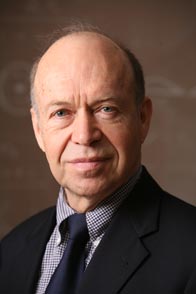
Climate expert Dr. James Hansen
In 1988, Dr. Hansen, an atmospheric physicist and now head of the NASA Goddard Institute for Space Studies in New York City, testified to an American Senate committee that our climate was being affected by greenhouse gases produced by humans.
In the years that followed, because he prefers science to communicating, he decided to leave the communication to those who enjoy it and are better at it. But now, twenty-two years later, with his grandchildren in mind, he is back in the communication game, trying to close the gap between what scientists have learned in those years, and what the public understands. Last week he was speaking in Toronto, and I was there.
The level of carbon dioxide in the atmosphere has risen from 280 parts per million (ppm) at the start of the industrial revolution to 387 ppm now. The level is continuing to rise, increasing about 2 ppm per year.
A few years ago, 450 was considered the “safe” upper limit by many climate scientists. They felt that catastrophe could be averted if the carbon level went no higher. But with the changes that are already being observed around the world, such as melting glaciers, that number has been revised down to 350.
The world that we know is in imminent peril.
To understand our failure to respond to the emergency, Dr. Hansen acknowledges that while there are obvious signs in some parts of the world that global warming is already here. In other places changes are less noticeable. The massive size of the oceans slows down the changes that are in the pipeline.
But we are very close to some tipping points and if we reach them, then what we do to try to prevent the climate crisis will no longer much matter.
One example is the melting of the icecaps. Since water is darker than ice, less ice means more heat will be absorbed, melting more ice, and so on.
Another example is the release of methane from the frozen tundra. Methane is another greenhouse gas, but many times more potent than carbon dioxide. More methane in the air means more warming, which means more frozen tundra thaws, releasing more methane, and the cycle continues.
Turning his attention to those who say we should do nothing because we still aren’t sure of the cause, Dr. Hansen makes it clear that there is no longer any debate amongst the world’s climate experts about whether climate change is anthropogenic. The earth’s rising temperature is the result of the carbon we put in the air when we burn fossil fuels. The only scientists who disagree work for big oil companies.
In response to those who believe scientists are exaggerating things in order to get government research grants, he points out that scientists are more likely to have their funding cut, or lose their jobs, for saying things that governments don’t want to hear. Governments would prefer not to take action.
As for the argument that the planet’s climate changes over time and that there have been warmer periods in earth’s history, he agrees. He then points out that more than 50% of all species died out the last time it happened.
Despite the gravity of the situation, and the short time frame we have left in which to act, Dr. Hansen remains hopeful that his grandchildren’s world will not be so different from ours. Here’s what must happen: a quick coal phase out; no unconventional oil developments, such as the Tar Sands; and the cost of carbon must rise.
To expand on the final point, fossil fuels are currently the cheapest form of energy, both because oil companies are subsidized, and because the true costs of using oil and gas aren’t included in the price we pay. As one example, health care costs resulting from air pollution should be included in the price. A rising tax on carbon at source of production would be the mechanism to accomplish this leveling of the playing field, so that green energy can fairly compete.
Dr. Hansen also has hope that the legal system will be part of the solution, as it was during the 1960’s when blacks in America fought for their civil rights. And just as public demonstrations aided that fight then, so must they do so again now.
Along with speaking engagements, Dr. Hansen is hoping his new book, ‘Storms Of My Grandchildren’, will help to foster the change of direction that is so urgently needed. One hundred percent of the proceeds from book sales go to 350.org. Their mission;” To inspire the world to rise to the challenge of the climate crisis – to create a new sense of urgency and of possibility for our planet.”
If the worst happens, James Hansen will still be able to look his grandchildren in the eye and say; “I tried.” How will you answer your children or grandchildren when they say, “You knew about this! Why didn’t you do something?”
Postscript: On October 10, if you would like to participate in an event that is a combination of the symbolic and the practical, go to the 350.org website and check out the plans for a work party near you.
(Dave Toderick has moved back to his hometown Welland to walk along the canal with his dog, Koocher, and write songs about things that inspire or annoy him.)
(Visit Niagara At Large at niagaraatlarge.com for more news and commentary of interest to residents in our greater binational Niagara region.)
 Niagara At Large