
By Doug Draper
It may be cold out there. But the last week of this January has seen the battle with Ontario’s government over what it is allowing its appointed hacks to do to Niagara’s hospital system approach the boiling point.
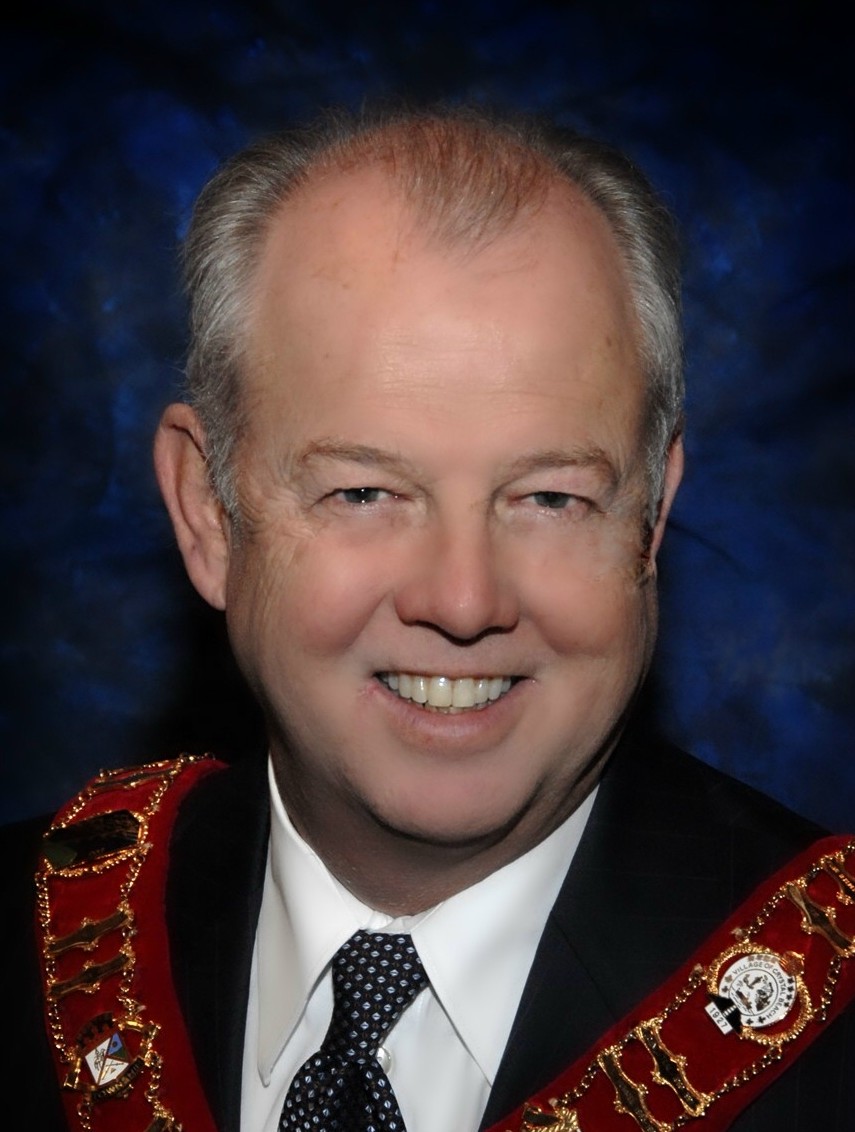
Fort Erie Mayor Doug Martin slams province on hospital services
During the week, Fort Erie Mayor Doug Martin fired off a letter to Ontario’s health minister, Deborah Matthews, challenging recent comments she made in The Globe & Mail that the closing of the emergency room in the hospital in his municipality was undertaken to provide better health care for residents and not to save money.
In the meantime, Sue Salzer, a south Niagara resident and leader of the Yellow Shirt Brigade, a citizens dedicated to fighting for better hospital services, was a guest on CBC’s Radio Noon program on 99.1 FM. On the program, she discussed questions raised by many in the community about the death of Fort Erie teen Reilly Ansovino, who died in a Boxing Day traffic accident in the municipality, and whether she might still be alive today if the emergency rooms at either the Fort Erie or Port Colborne hospitals – closed last year by the provincially sponsored Niagara Health System – were still open.
You can hear the entire CBC interview with Sue Salzer (if you have speakers on your compute)r by clicking on the following link http://www.cbc.ca:80/ontariotoday/story_archive.html and scrolling down Radio Noon Ontario’s home page in the ‘Audio Archives’ section until you reach the title “ER Closing,” then click on that and listen.
Niagara At Large is also posting the Fort Erie mayor’s letter to Ontario’s health minister in its entirety, which you can read by clicking on ‘keep reading’ now.
DOUGLAS G. MARTIN
January 27, 2010
Sent via email: dmatthews.mppco@Ilbera ola org
The Honorable Deborah Matthews
Minister of Health and Long Term Care
10th Floor Hepburn Block, 80 Grosvenor Street
Toronto Ontario
M7A 2C4
Honourable and Dear Madam:
I would like to take the opportunity to respond to your comments in the Globe and Mail on Saturday January 23, 2010 in a column written by Karen Howlett entitled “As ER’s Close, the Debate on the Human Cost Begins “.
This article focused on the tragic death of Reilly Anzovino, a
young resident of our community and the call for a Coroner’s Inquest. We in Fort Erie support an Inquest to truly learn the truth of events that fateful night.
What we do not support however is your assertion in the article that the closing of our emergency department at Douglas Memorial Hospital was undertaken to provide better quality health care for our residents and not to save money.
The Hospital Improvement Plan (HIP) approved by your Ministry was in fact a cost cutting document disguised under the cloak of providing better quality health care to our residents. You cannot dispute the fact that your Ministry through the Local Health Integration Network (LHIN) forced our local health providers to come up with a plan to eliminate their deficit and continue to provide equitable and efficient health care with an already underfunded budget.
The underfunding of our health care system has in fact created a situation in this province that has given rise to your other comment in the article stating “It’s important that the public understands that if you want to take advantage of the best health care, we can’t provide that in every community.”
It begs the question then, “If you are not in the community that has the best health care, what level of health care can your community expect?” A question that I am sure a lot of Ontarians and the residents of Fort Erie would appreciate being answered by you.
Madam Minister, one of your quotes in the article stated “I am absolutely convinced that the people in Niagara have better quality health care now than they did before.” I have been asking
for a meeting with your office for sometime now so that you can illustrate to me how that statement bears true for the residents of Fort Erie, because I can assure you the people who believe that are not living in my community. The long lines and wait times in order to be attended to in the Welland, Niagara Falls and St. Catharmnes hospitals that our residents must now go to for Levels 1, 2 and 3 treatment is beyond outrageous. Waiting 6-7 hours just to see a doctor, no beds, overnight stays in the hallway. The list of complaints is lengthy and certainly includes bed closures. Bed closures in the face of bed shortages, a common
explanation for the lengthy wait times, are troubling at best.
Did Reilly Anzovino receive the best care closest to home? We will never know the answer unless there is a Coroner’s Inquest.
I appreciate that your task of continuously developing and maintaining affordable health care in Ontario is difficult. However, never in my life have I seen people rally together in such large numbers, time and time again, to send a message to Queen’s Park.
I would be grateful for the opportunity to meet with you at your earliest opportunity to discussthe future of health care services in Fort Erie and Niagara.
Yours Truly, Douglas G. Martin
Mayor
Ont. ER doctors say standards needed for ER care
Jan. 28 2010
TORONTO — The death of an Ontario teen while being rushed to hospital should be a wake-up call for Canadians that emergency care standards are needed across the country, said a group representing ER doctors.
Injured in a car crash, 18-year-old Reilly Anzovino died Dec. 27 just as the ambulance carrying her reached the hospital in the southern Ontario town of Welland, about 20 kilometres from the accident scene.
Her grieving family and others believe her life may have been saved if she had received help in Fort Erie, some five kilometres closer. The emergency room in that city was closed last year as part of a controversial hospital restructuring plan.
Ontario isn’t alone in grappling with tough decisions about closing emergency departments, and national standards are needed to help guide those decisions, said Dr. Alan Drummond, a spokesman for the Canadian Association of Emergency Physicians.
“Really, this could happen anywhere,” said Drummond, who has managed the emergency department at Perth and Smith Falls District Hospital in eastern Ontario.
“Why don’t we take this opportunity of this tragic death to say, ‘Look, let’s re-dedicate ourselves to planning effectively. Let’s not make health-care decisions based on budgetary constraints within regional health authorities.’ ”
All levels of government should sit down with health-care workers and develop a “template” that would lay out what’s needed for an effective emergency health-care system, he said.
It could set down guidelines, such as how many hospitals should have emergency rooms and how they should be staffed, funded and equipped, he said.
“Let’s decide what we as a nation are going to accept in terms of time and distance to effective emergency care, because that doesn’t seem to be defined by anybody,” Drummond said.
“I mean, is it OK to have to drive an hour to an emergency department? Or should you be able to access an emergency facility within half an hour?”
The idea was first floated with provincial health ministers in 2002, when a Quebec man died after he was turned away from a Shawinigan hospital because the emergency room was closed due to a staffing shortage. He died of cardiac arrest en route to another hospital in Trois Rivieres, about 30 minutes away.
“We need to talk about this because this has happened in a pretty progressive society in Quebec and it’s going to happen elsewhere,” Drummond said.
British Columbia is the only province that’s developed such standards, which have helped guide the province’s health regions in their planning since 2002, said Tom Closson, president of the Ontario Hospital Association.
In B.C., where the number of people living in urban centres compared to rural areas is virtually the same as Ontario, the province has stipulated that 98 per cent of residents in a region should be able to get access to an emergency department within an hour, Closson said.
“Whether Ontario should have that same standard of one hour is, I guess, a question for Ontario to answer,” he said.
Each province should make those decisions based on their resources, geography, where people live and the number of emergency doctors and nurses, among other factors, Closson said.
There is a need for standards, but they must be set by elected officials, not by regional authorities like Ontario’s Local Health Integration Networks, which gave the green light to closing the Fort Erie emergency room and another in nearby Port Colborne, said provincial Opposition Leader Tim Hudak.
“In this circumstance, the LHINs were merely following the orders of the minister of health who told them to cut some $15 million out of the Niagara Health System,” he said.
“As a result, the emergency rooms at Fort Erie and Port Colborne hospitals were closed.”
But the coroner must first call an inquest into whether the ER closures played any role in Anzovino’s death, said Hudak, who was born and raised in Fort Erie with members of the girl’s family.
“Having a daughter of my own, I can’t imagine the depths of what they’re going through,” he said.
“And the family rightly needs answers. Did the closure of the emergency room prevent their daughter from getting care that may have saved her life?”
Premier Dalton McGuinty has said that he still supports the decision to close the ERs, which he said was done under the advice of the LHIN.
His government, which has warned of smaller funding increases to hospitals amid an unprecedented $25-billion deficit this year, set up 14 LHINs across the province four years ago to make local health-care decisions and dispense government cash.
 Niagara At Large
I’m staying with my sister in Ottaway, where my Dad is into his fifth week at the Montfort General Hospital. He’s recovering well from surgery to remove a tumour in the colon, but is not yet medically stable, and suffered a heart attack while in the ICU. We have full confidence in his medical team, but they appear to be fighting a rigid bureaucracy determined to get our father out of his hospital bed and into a nursing home as fast as possible — and to charge him for the privilege, as an ALC (Alternate Level of Care) patient.
After the doctors determine that Dad is no longer in need of Acute Care, Dad needs to go to a Rehabilitation Centre to continue his recovery. If he gets this opportunity, chances are high that he won’t need Long Term Care, but can go to a Retirement Home.
Before he fell ill at Christmas, Dad had been living on his own for twelve years. He was too competent to qualify for Home Care, and is mentally in full possession of his faculties (he’s nearly 93).
His medical team assures us that he won’t be released until he’s medically stable and not a risk to contract pneumonia, which would of course put him back in hospital. The hospital’s Discharge Planner, however, insists that she’s the one who gets to make the decision about where he goes, and when. Let’s hope she wrong — when bureaucrats can overrule doctors, the system is really in decline.
The province is going out of the rehab. business as fast as it can, it seems. I urge my friends and colleagues in Niagara to keep a watchful eye on the situation with CCC (Complex Continuing Care) beds in the Niagara Health System — don’t expect them to be around long.
LikeLike