
-
‘This Is The Time,’ Says Award-Winning Palliative Care MD
A News Release from McMaster University’s Faculty of Health Sciences
Posted January 29th, 2016 on Niagara At Large
Hamilton, Ontario – Grimsby palliative care physician Denise Marshall has a clear view about the changes in Canada that will soon include support for physician assisted death.
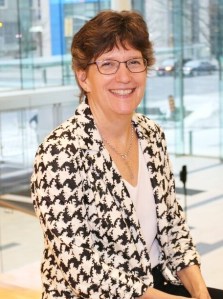
Dr. Denise Marshall at McMaster University in Hamilton, specialist in palliative care
“It needn’t be polarizing; who isn’t in favour of the relief of human suffering?” she said. “It is clear Canadians have asked for physician assisted death, and the Supreme Court has honoured that societal wish.
“Now that there is national focus on the nature of death and dying in Canada, we have an unprecedented opportunity to ensure that the current option of equitable palliative care for all Canadians, is a genuine option. This is a chance we won’t get again.”
The Supreme Court of Canada has given the Canadian government until the summer of 2016 to deliver a new law after the court’s ruling that a ban on physician-assisted dying violated Canadians’ charter rights.
“Palliative care has a focus on the end of life, but it is really just about providing good care,” said Marshall, who explained that palliative care requires not only excellent healthcare services but an engaged society, to achieve the whole person care that’s needed.
Marshall, an associate professor of family medicine for the Michael G. DeGroote School of Medicine at McMaster University, has been an eloquent advocate of palliative care for more than 25 years. A resident of Grimsby since 1983, she received the 2016 Elizabeth J. Latimer Prize in Palliative Care from the department on Jan. 28.
She remembers the one day she committed her career to palliative care while a medical student at McMaster in the mid-‘80s. She had been interested in all types of medicine, but in a small teaching room at the back of the cafeteria at the now Juravinski hospital, she heard McMaster professor Elizabeth Latimer talk about care at the end of life.
“She explained that supporting people at the end of life involves mind, body and soul. It was the first time we talked about the whole patient. It was startling. What she said made 100 percent sense, and I knew that was exactly what I was going to do.”
Latimer, a physician who was internationally renowned for her pioneering work in palliative care, became Marshall’s mentor. Marshall dove into electives, research and a family medicine residency with an emphasis on this newly developing area of health care.
During her career of more than 25 years since, Marshall has provided leadership on palliative care issues at every level, from establishing the Niagara West Palliative Care Team in Grimsby and the Division of Palliative Care at the Michael G. DeGroote School of Medicine, to leading regional, provincial, national and international groups advising on the development of palliative care. She is also a founder and the first medical director for the Niagara Hospice – McNally House.
“I like going back and forth at all levels from grass roots to the 30,000 foot level. They’re inseparable levels; all necessary for a comprehensive system of care,” she said.
The Elizabeth J. Latimer prize was named for the professor who died in 2012. The prize recognizes excellence and innovation in palliative care by a clinician, teacher, researcher or administrator whose work continues to pave the way for continued growth and improvement of end-of-life care in the region.
NOW IT IS YOUR TURN. Niagara At Large encourages you to share your views on this post. A reminder that we only post comments by individuals who share their first and last name with them.
Visit Niagara At Large at www.niagaraatlarge.com for more news and commentary for and from the greater bi-national Niagara region.
 Niagara At Large
Palliative care provides emotional, spiritual and physical support and comfort for those with terminal illnesses. Doctor assisted death provides relief for those who are beyond being helped by such support. If we provide one we must be allowed to provide the other if the patient so requests. Would anyone deny comfort measures, emotional support or pain killers to those who are suffering? Only a sadist would consider doing such a cruel thing. How then can we deny someone’s request to die when suffering intractable emotional and physical agony from an incurable deadly illness? To do so is equally sadistic. Such a decision must be made out of empathy and love for the suffering individual and respect for their wishes, not out of our selfishness by not wanting to let them go. Keeping someone alive who is suffering so terribly that they wish to die is denying their dignity and human rights.
If people have religious objections they likely will not request such actions on their own behalf but that does not give them the right to deny such choices to those who do not share their beliefs. Others who get on their hind legs and claim assisted death will be used against the mentally handicapped, those suffering mental illness, etc., are absolutely wrong. All countries with assisted death have strict regulations, cases must be approved by a group of professionals AND the person involved and usually has stipulations like untreatable pain and probable death within 6 months.
There is a time to live and a time to die. Humans are a species cognisant of their mortality and so many of us fear death and most even refuse to discuss it. Not discussing it does not make it go away and only makes it more terrifying. I cannot tell you how many times terminal patients asked me to give them something to put them out of their misery but it was impossible. Those who say “we would be playing god” are missing the point. Keeping people alive when a disease is killing them, there is no hope of recovery and they are suffering, THAT is playing god.
It is time Canada joined the 21st century on this matter and it must be done so thoughtfully and with precautions against its misuse.
LikeLike