
A Niagara At Large Coming Events News Brief
Local historian John Bacher will be speaking on two critical figures in the protection of Ontario’s environment at Niagara area historical societies next week. The first talk, “Mel Swart: Guardian of Ontario’s Environment”, will be held at
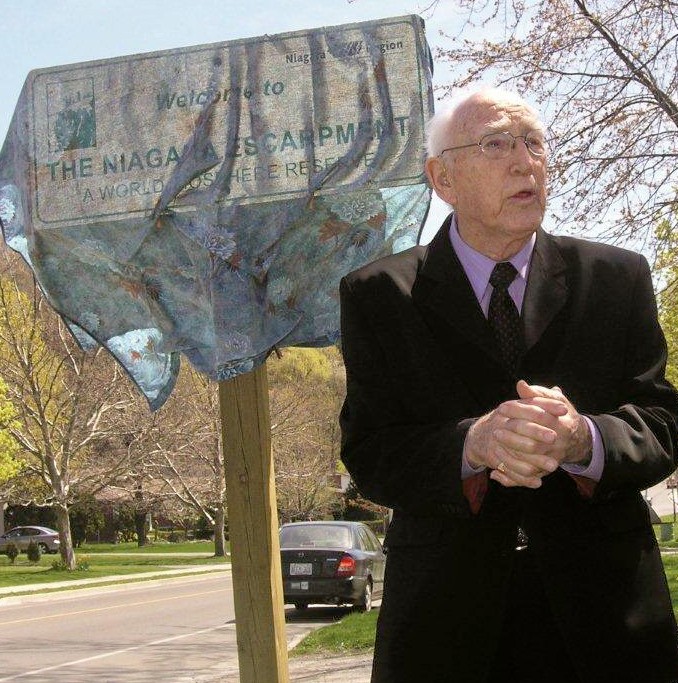
The late Mel Swart, a Niagara, Ontario political leader, was a leading spokesperson for saving what is left of the region’s rural lands. File photo by Doug Draper
7:30 pm Monday, March 31st at Chestnut Hall, the home of the Thorold and Beaverdams Historical Society adjoining the Thorold Public Library at the corner of Ormond and Vine Street.
The second talk on “Edmund Zavitz: Rescuer of Ontario”, will be delivered at the Lundy’s Lane Historical Society The meeting will be held at 7:30 pm on Thursday, April 3rd in the LaMarsh Room of the Niagara Falls Public Library at the corner of Morrison Street and Victoria Avenue.
Dr. Bacher’s talk on Mel Swart will be based on a biography that has been prepared by the Preservation of Agricultural Lands Society, which is still going through a funding and editorial process. The following extracts from the draft biography give some sense of Mel Swart’s importance in the history of the Niagara region.
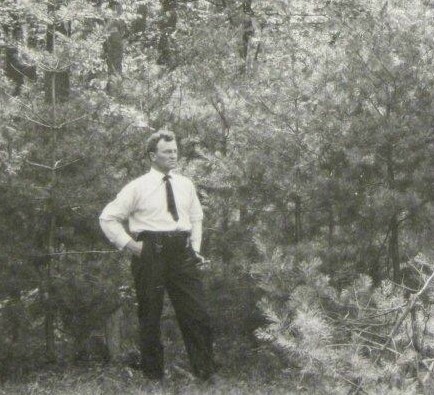
Renown ecologist Edmund Zavitz in his beloved green surroundings. File photo
“From 1951 to 1965 Mel Swart served as a Welland County councillor and from that obscure role created a veritable transformation of Niagara. Out of what his daughter Melva Snowling describes as an “endless round of meetings”, he set in motion major changes that endure to this day. They helped rescue the region from pollution, sprawl, social inequality, backwardness and poverty.
Swart took up a battle for transparency in County government. This won the backing of what was then a more well read and influential daily newspaper, the Welland Tribune. The party caucus system was abolished. The Welland County Council met on the basis of regular bi-monthly meetings. A critical change was expressed in the successful motion he moved on June 18, 1956. It read that, “the Warden be selected from the Council as a whole and that the policy of choosing the Warden from a political caucus end and any by-law to the contrary be amended.”
Mel Swart learned his lessons in environmental policy from another remarkable Niagara figure, the Ridgeway born and raised, Edmund Zavitz.
It was Swart’s reading of the Report of the Select Committee on Conservation, which featured his photos of former sand dunes created by human abuse of the earth into healthy forests, which in his words, turned him “into a conservation activist.” In appreciation of Zavitz’s role in rescuing Ontario from desertification, Swart helped to organize a tree planting his honour in Ridgeway in 1970, a several months after his death.
(Negara At Large encourages you to share your views on this post. A reminder that we only post comments by individuals who share their first and last name with them.)
 Niagara At Large