
– Gary Burroughs Says He Welcomes Solutions From Council And Public, Is Tired of Negativity
This Friday, April 19, Gary Burroughs, the Chair of Niagara, Ontario’s regional government, delivered his annual ‘State of the Region’s address at an event in Niagara Falls.
The Chair’s address highlights for Niagara residents the status of services the regional government provides and key initiatives it is working on to improve the quality of life for residents across the region.
As has been our policy in the past with address to residents from our political leaders, Niagara At Large is posting the entire text of Chair Burroughs’ address for our readers’ information. So here it is –
Thank you everyone and welcome – what a great turnout.
A very special thank you goes out to today’s event sponsor, Bob Watson and the folks at Pen Financial.
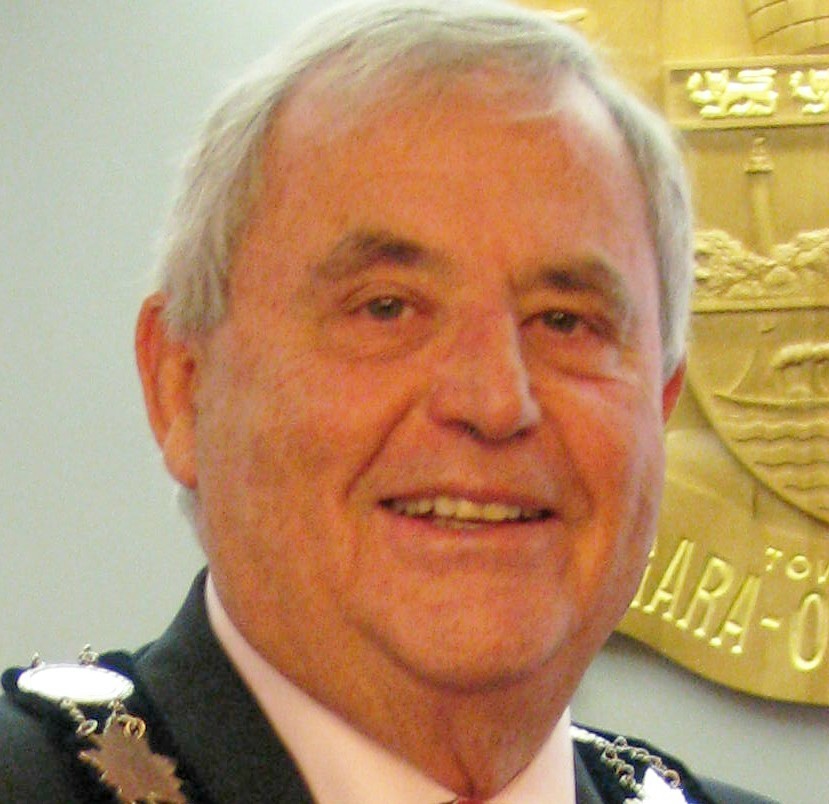
Niagara Regional Chair Gary Burroughs
I would also like to thank Cogeco for airing today’s event. Our media sponsors are key to sharing our message with both our residents and our businesses.
This is a fantastic location here at the Fallsview Casino and I thank the event organizers for putting this event on and affording me an opportunity to address not only Chamber members, but our broader Niagara community.
There have been so many “State of the City’s” lately; I was beginning to feel a bit left out; BUT, listening to those speeches, it’s quite evident there are a number of successes around the Region that should be celebrated. More importantly, there has been a decidedly positive tone around Niagara from the Mayors about their communities – to me, that’s both encouraging and enlightening.
For example, we have heard about:
- St. Catharines being ranked the #7 community in the Americas (north, central and south) in their population category for best foreign direct investment strategy
- We’ve heard about the thriving sports-tourism sector in Welland & seen the growth
- TSP Towers injecting new life into Thorold’s former Hayes-Dana plant
- Ivanhoe-Cambridge creating a destination retail market in NOTL
- the Canadian Motor Speedway clearing the last of its hurdles in Fort Erie
- the expansion of St. David’s Hydroponics
- and all the while countless unsung heroes in manufacturing quietly expanding their operations, and renewing their commitment to doing business here
Let me say at the outset that I’m not a pessimist, and frankly I have hard time reading, listening and talking to those who continue to perpetuate negativity & criticism about Niagara; whether about our past, present or future. In my opinion, criticism without seeking or reaching solutions is not helpful.
As one economist said as we tip-toed out of 2008 recession, “we are going to talk ourselves back into recession”.
I’m not here to talk Niagara anywhere but forward. I’ve thoroughly appreciated talking and listening to those who have been constructive in their recommendations and wanting to work together for all of Niagara.
With that said, we are certainly not denying reality. But it’s time we take both responsibility and control of our own self-determination.
There are 3 themes of my speech today, focused on the magnitude of services provided at the Region, our focus on jobs, and improving communication in and among all of our communities.
You have seen the video that was played in the introduction. It laid out some of what we do at the Region, so I want to take a minute or two to share a few numbers with you.
I know we have a strong contingent of businesses in the room. I was a business owner for 30 years. As business owners, you are acutely aware of your margins, your overhead, your employees, your clients, and your potential clients. You have these numbers mapped out, in many cases to the penny. This is what makes you successful.
So you can appreciate when I say the scope and magnitude of programs and services delivered by Niagara Region is immense and wide-ranging, much like many of your own business operations.
We often hear anecdotally that government is “too big”. That we duplicate services. But not all municipal government is the same – and it’s not supposed to be. There is no denying Niagara Region is a considerable organization. There is also no denying the Region delivers hundreds of services and programs to thousands of Niagara residents on a daily basis – many of which are legislated by provincial law (and subsequent transfer dollars), and not done at any other level of government, such as:
- Community & Social Services (OW, ODSP, Employment supports)
- Public health (immunizations, dental clinics, sexual health, public education)
- Police
- EMS (Ambulance) + dispatch
I’m going to highlight a few significant programs and services that I find particularly interesting, and likely of significance to those of you in this room.
I ask that you look at these numbers from multiple perspectives: as a taxpayer, a resident, a business, and as a user.
I think you would agree these are arguably significant numbers. But the point isn’t to show simply how large we are – this isn’t about groaning and suggesting government is ‘too big’ – the “see I told you so” attitude.
The point is to highlight the magnitude of Regional services and the positive impact being made in countless lives and businesses each day.
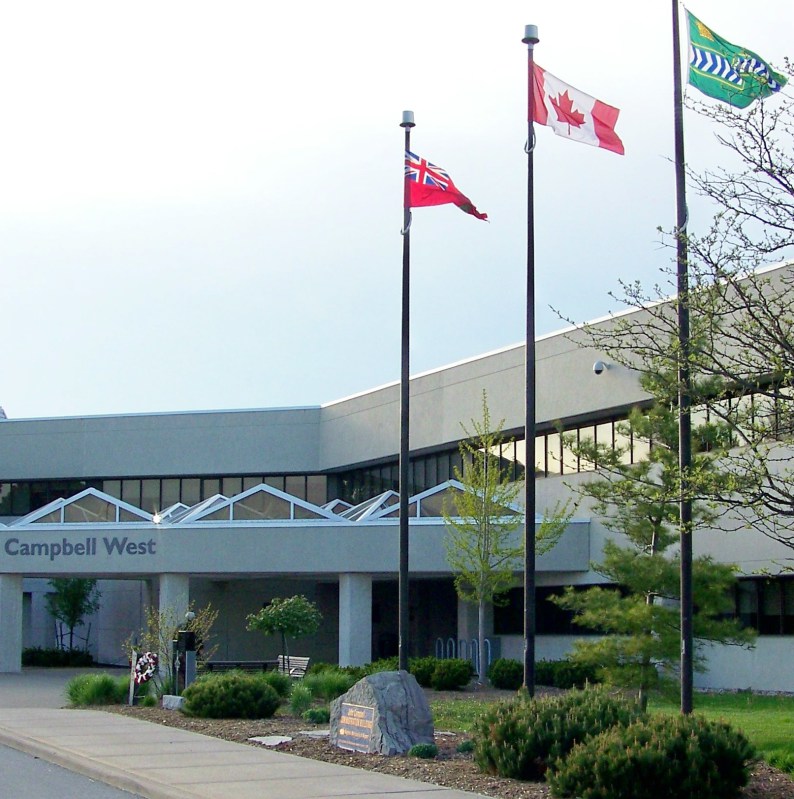
Niagara Regional Headquarters in Thorold, Ontario
There is a significant, positive underlying story behind the numbers. Yes, we have a significant budget. We have several thousand employees. We have hundreds of programs and services. But most importantly, we positively impact hundreds if not thousands of businesses, thousands of families, thousands of children and seniors, and tens of thousands of residents – all on a daily basis. The magnitude and scope of services provided by Niagara Region is significant and in many cases, unknown and misunderstood by businesses and residents alike.
A recent survey of Niagara residents indicated they wanted to know more about how we spent their tax dollars, so I am pleased that opportunities like this present themselves for me to speak to the scope and magnitude of services that are provided by the Region.
Many of you are aware of the recent changes to the Regin’s economic development model. It’s now a more distributive model, leveraging the assets in the community, driving innovation and jobs and more responsive to local business needs.
Contrary to many beliefs, we are not about duplicating services, and Regional Council has been adamant about refocusing our efforts to those priorities where the Region has strengths – trying not to be “everything to everyone”. It’s clear we’re not the “same old, same old” organization.
We have also released our Economic Growth Strategy after considerable consultation. It’s a short-term blueprint for maximizing our competitive advantages to grow jobs. It will feature both initiatives to support our existing businesses, and measures to attract new investment to Niagara.
Our Economic Growth Strategy “vision for success” includes: Niagara as a prosperous region and economic leader; A magnet for talent and creativity in a knowledge-based economy; A place where business and personal goals are achieved; Where opportunity is matched with skill; Where civic, business & political leaders work together for common goals; And where successes are celebrated and people join together to build on them.
We have refocused our efforts in economic development to highlight 4 focus clusters:
- tourism
- manufacturing
- agribusiness and
- transportation/logistics sectors
– matching our strengths with opportunities for the short-term future.
With the changes to our approach to economic development, I want to speak to some of the highlights over the past year, which have a direct impact on the business community in Niagara:
Regional Council has implemented a two-year industrial development charge freeze to support industry looking to locate new facilities or to expand their operations in Niagara.
We have now completed the Gateway Economic Zone Community Improvement Plan, which provides significant incentives to businesses locating in the identified employment lands.
Our Development Services Division has refocused to an ‘Open For Business’ agenda – is it perfected yet, no, but it’s certainly working with the development community and our municipal partners to get better.
The planning memorandum of understanding with the 12 municipalities was reviewed and revised. I was also at a meeting that St. Catharines recently initiated with the 12 municipalities to make further refinements to the planning process to allow for easier, client-focused service delivery with improved communication; because, as many of you would agree (and we have heard this from you), efficiency isn’t always about saving money, but saving time and process; it shows that working together works.
The Responsive Region Improvement Team has had considerable success with its ‘LEAN focus’, seeking new ways of maximizing value for money, making government more ‘business-like’, with an emphasis on performance metrics with measureable results. Maybe more importantly, the RRIT has had a dramatic impact on changing attitudes and culture at the Region.
On the capital works side, the Region’s innovative new “Capital Visualization Tool” is now available on the web (www.niagararegion.ca). This is a unique, creative, & interactive way for businesses and residents alike, to see where Regional capital projects in their communities are being planned over the next 10 years. What is the cost, and what is the timing? Check it out!
Two of the Region’s largest capital projects ever are unfolding this year. Residents in St. Catharines will see Burgoyne Bridge ($56M) move forward – the Region’s single-largest project, and work on the $43.2 million NOTL WWTP is also set expanding capacity and renewing critical infrastructure.
We are also working together (with the full support of the private sector group “Industrial Power Users of Niagara”) to advocate, coordinate and support the creation of a Niagara Industrial Power Cluster, that would improve the electricity rate (a significant cost input) impacting the competitiveness of Niagara’s heavy users of electricity (7.5 % of input costs).
In this case, the concept was initiated by the private sector and our role is advocacy, and it will be a part of this year’s Niagara Week efforts, because “working together works”.
Initiatives like these are helping to directly support our manufacturing sector and helping to retain, create and attract jobs to the region. Across the border, incentives like this are prevalent, and we need these advantages to remain not only competitive domestically, but internationally.
Lastly, and of significant interest to the future of Niagara’s economy, Niagara Region is leading and driving a major proposal among our other southern Ontario municipal partners, for a significant, long-term transportation and multi-modal linkage to be created for goods movement accessing Niagara’s border access.
As you see from the map, there is significant economic potential for Niagara, and our role in driving economic productivity and movement of goods through effective transportation linkages.
Capitalizing on our proximity to the border, and highlighting Niagara as a key access point, this proposal, which Niagara initiated and has been leading, has been endorsed by a number of surrounding Regions and large municipalities, including (in geographic order): Niagara Hamilton Burlington Halton Region Waterloo Region Peel Region and York Region Along with the Southern Ontario Gateway Council who as you can see, represent a significant amount of private sector representatives and economic output.
To be clear, some fear this will divert tourism, and those visiting the region; this is not the case.
So we are leading the advocacy with the province, working closely with the Ministry of Transportation to take this strategic economic logistics corridor and US market connection, to the next level to maximize the economic development benefits, accelerated approvals process and potential joint funding opportunities.
This access to the US markets is critical, and this map clearly paints a fantastic picture of the economic potential for Niagara. This isn’t a quick fix, and not something that will be built in the next 2 years.
But there is power in collaboration, in working together, as a united front to work with the government and related ministries to achieve success. We will continue to drive this initiative forward with leadership, foresight and collaboration, with Niagara’s economic future as our visionary backdrop.
My last theme is focused on communication. It has been identified as a focus of Regional Council, and has been my number one priority as Regional Chair. Improved communication means more transparent, collaborative and two-way communication with our businesses, our residents, and our stakeholders.
Many people perceive Regional government as a duplication of services. It’s my hope that having seen some of the numbers today, you have a slightly different view of the work undertaken at the Regional level. We recently issued a bold new ad in print media – meant to provoke and engage people, while informing them of where tax dollars are going.
Communication also requires collaboration and a commitment to an effective 2-way street. The outcome is clear -getting there needs to be worked on together.
For example, there are a growing number of incubation services in Niagara. There are a number of organizations and Chambers doing BR&E – that’s fantastic. Looking back on my years in business, I often say that I “didn’t know what I didn’t know”. I was focused on growing a successful business. Nowadays, there is tremendous support out there in our communities.
No one is disputing good work is being done on all these fronts – and we are talking. But are we truly collaborating? Are we maximizing our resources to ensure the most effective service is being delivered to the maximum amount of clients – regardless of whether that pertains to BR & E, planning, homelessness, or a host of other programs and services?
The bottom line, and I can’t stress it enough, the Region might be involved in a particular sector or program, but we’re not there trying to take anything over or take ownership.
I know some have this notion that we are; but we have shown (particularly on the economic development front), we are prepared to focus our efforts where we can be useful – to be effective leaders, playing a coordinating and supportive role.
In closing, I refer back to what I said at the outset: that I have observed a decidedly more positive tone around Niagara as I listen to our mayors speak about their communities.
We need more stories, more attention, more talk on the street and at BA5’s, about businesses opening in Niagara, rather than the ones closing.
Media play a huge role in shaping the future transformation of Niagara – our economy, our social sectors, our public debate, and our perspective. We can’t achieve the type of transformation that we want without the media as effective, positive and contributing partners alongside the public and private sector driving Niagara forward.
We are turning the corner. We have significant achievements to be proud of. I listed a few I heard in recent Mayor’s speeches. We have a quality of life that is exceptionally high, and we have resilient, determined and progressive leaders in our business community that are helping to drive us forward.
This is extremely positive and provides a healthy environment for both public and private sector to have those meaningful and collaborative discussions about mutually-beneficial ways to grow Niagara’s economy.
I know there is a new report out from the GNCC on economic growth and prosperity. These efforts need to be part of a healthy, positive, constructive, and ongoing dialogue in our community.
As Chambers of Commerce, I encourage you to continue your advocacy and community involvement. I am certainly willing to attend any meetings you have as Chambers to discuss issues that are important to you.
It’s great to have such good representation today from the various Chambers. We need to hear from the business community. You are the economic engine of Niagara.
Together we are creating the conditions for growth and “getting it right”. We need continued dialogue – if you don’t think new policies are working out the way they are anticipated to, we want to hear from you.
Government can’t create jobs – but we can create the conditions to allow you, the ones who CAN create jobs, to leverage our assets to your advantage and support your efforts to build a stronger, more prosperous, healthy Niagara.
Thank you for the opportunity to be here today and to share some of my thoughts on the “State of the Region”. Remember, “Working Together Works”.
(Niagara At Large invites you to join in the conversation by sharing your views on the content of this post below. For reasons of transparency and promoting civil dialogue, NAL only posts comments from individuals who share their first and last name with their views.)
 Niagara At Large
Other than TSP China, not one mention of Green Energy. Also a LEAN government that is more businesslike and is laser focused on manufacturing and Niagara as a transport hub. Is my smartphone broken and getting speeches from 1982? Oh rats, that’s not the positive attitude the GNCC/regional council/business government asked for…
LikeLike
Correct me if I am wrong, but I do not see .
1) Tax relief –except for business. The Niagara Region tax payer pays on average $3000 per year of AFTER TAX income in property taxes for a modest bungalow! That equates to approximately $4000 of PRE-TAX income or more (10% of the median Niagara salary) depending on taxable income. How can you have affordable housing if tax payers are paying $350 per month just on property taxes? I understand the region is only a third of the problem.
2) Cost Cutting (operating costs) – Union salaries and benefits are unrealistic for this region. Where is the discussion of that?
3) Cost Cutting (Capital Costs) – The saying “let a government govern a desert and then there will be a shortage of sand” comes to mind when I see the overkill, mismanagement and extravagance of past capital projects. Where is the discussion regarding tempering designs, properly managing projects and implementing solutions that make fiscal sense from both an operating and initial cost perspective moving forward?
Call me crazy, but this is what the majority of Niagara citizens want to see. Seems to me Burroughs is relinquishing responsibility for the past with his “Tired of the Negativity” tactic. People wouldn’t be so negative if they didn’t have a reason, or suspect they had a reason to be.
With Disappointment ….. Just sayin……
LikeLike
Wonderful! Just wonderful! The Niagara Regional Chair is optimistic about the future of the Region under his watch.
Really! But, where is the evidence? To conclude that the chair is justified in his optimism one must not look to the Regional Government’s recent past, which is filled with depressing situations and activities such as the ‘Tim Lewis fiasco’: http://newsalertniagara.blogspot.ca/2012/12/the-tim-lewis-story.html
Or the vacuous job killing/commerce killing http://newsalertniagara.blogspot.ca/2013/02/industrial-development-fee-scheme.html
Or the lack of concern when it comes to Toxic pollution: http://newsalertniagara.blogspot.ca/2012/11/watersmart-niagara-how-does-that-work.html
The list is a long as your arm. However, pay attention to the Chair’s admonition regarding positive and negative sentiments: http://newsalertniagara.blogspot.ca/2013/04/presenting-concerns-to-government.html
Of course the Regional Chair and all 12 mayors plus 125 councillors (across local governments in Niagara) are going to accentuate the positive as best they can! Would you expect these municipal leaders to bemoan the negative aspects of their leadership?
LikeLike
Well said Preston. My answer is NO. Perhaps we should send a link to this dialogue to the Burroughs et company!
LikeLike
Very great post. I just stumbled upon your blog and wanted to say that I have truly enjoyed browsing your blog posts.
After all I’ll be subscribing to your feed and I’m hoping you write
again soon!
LikeLike